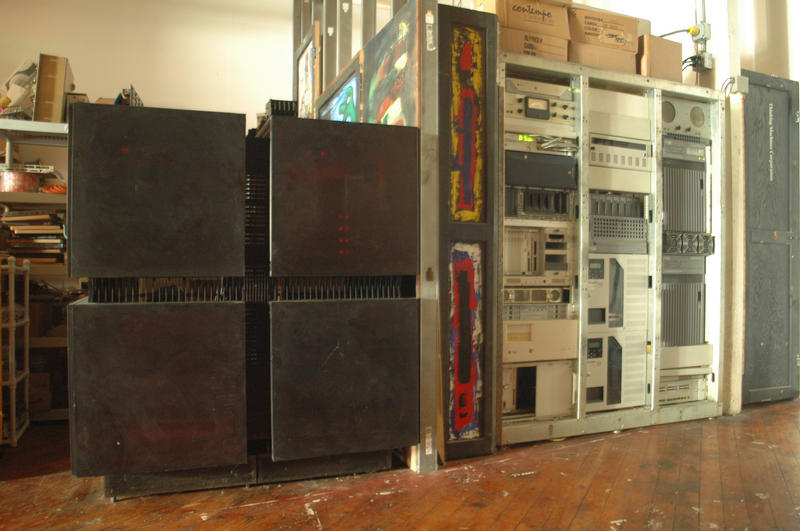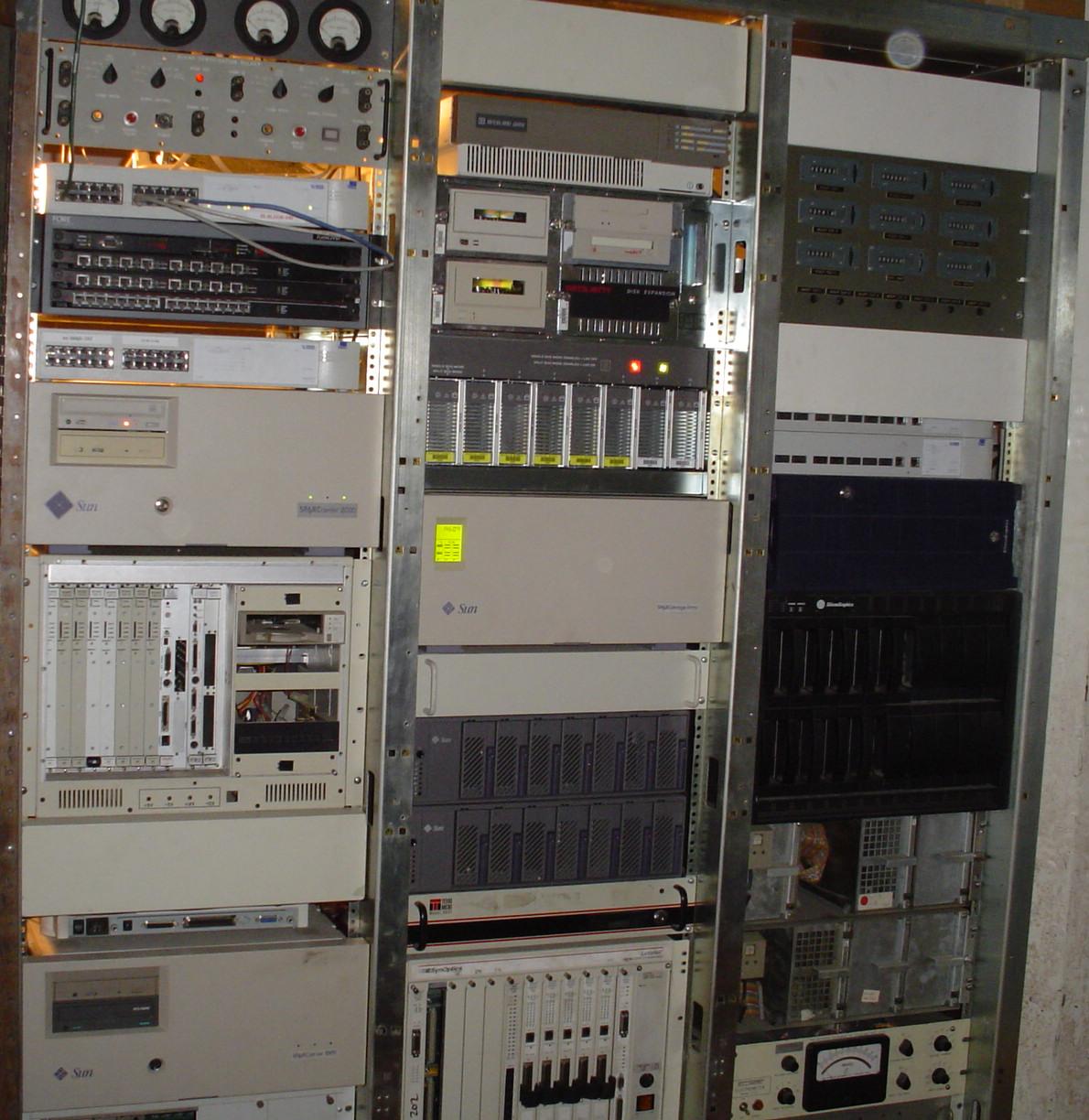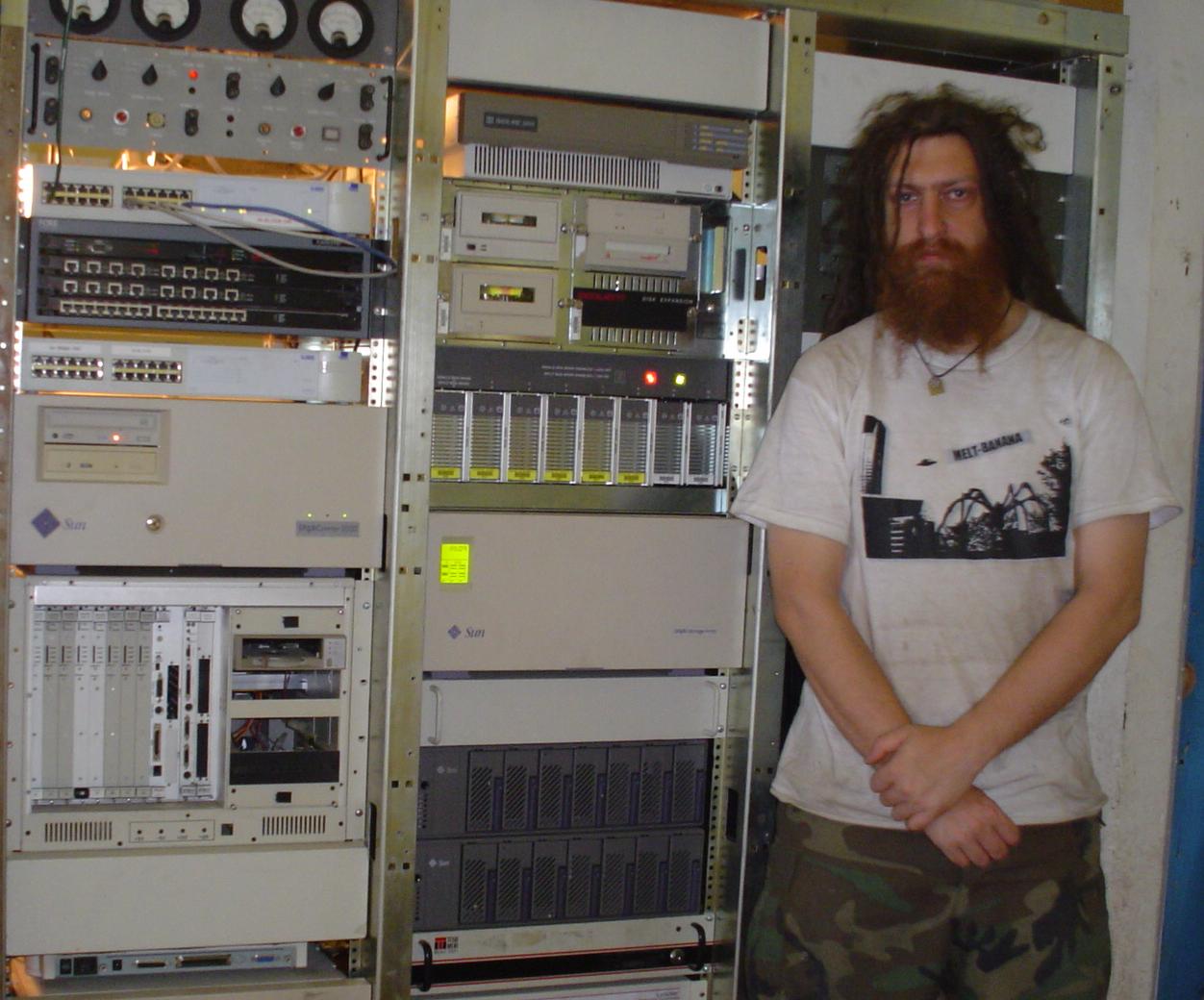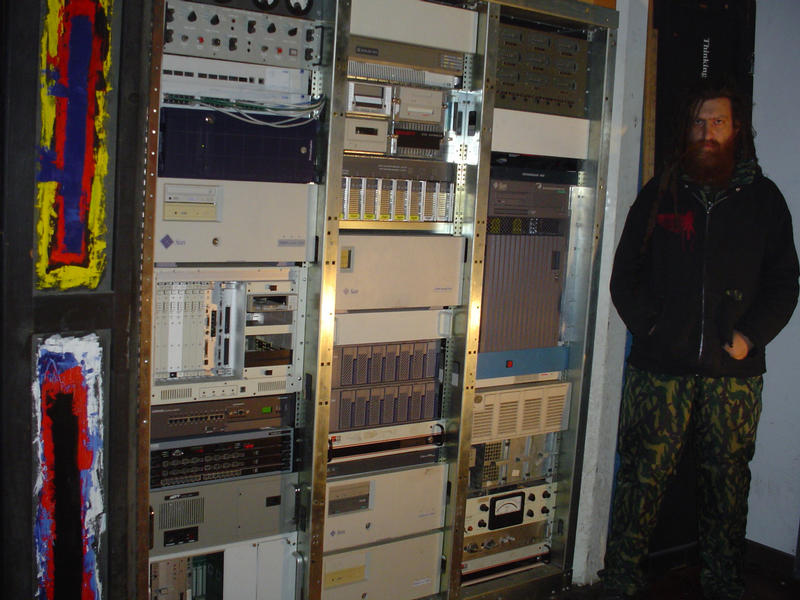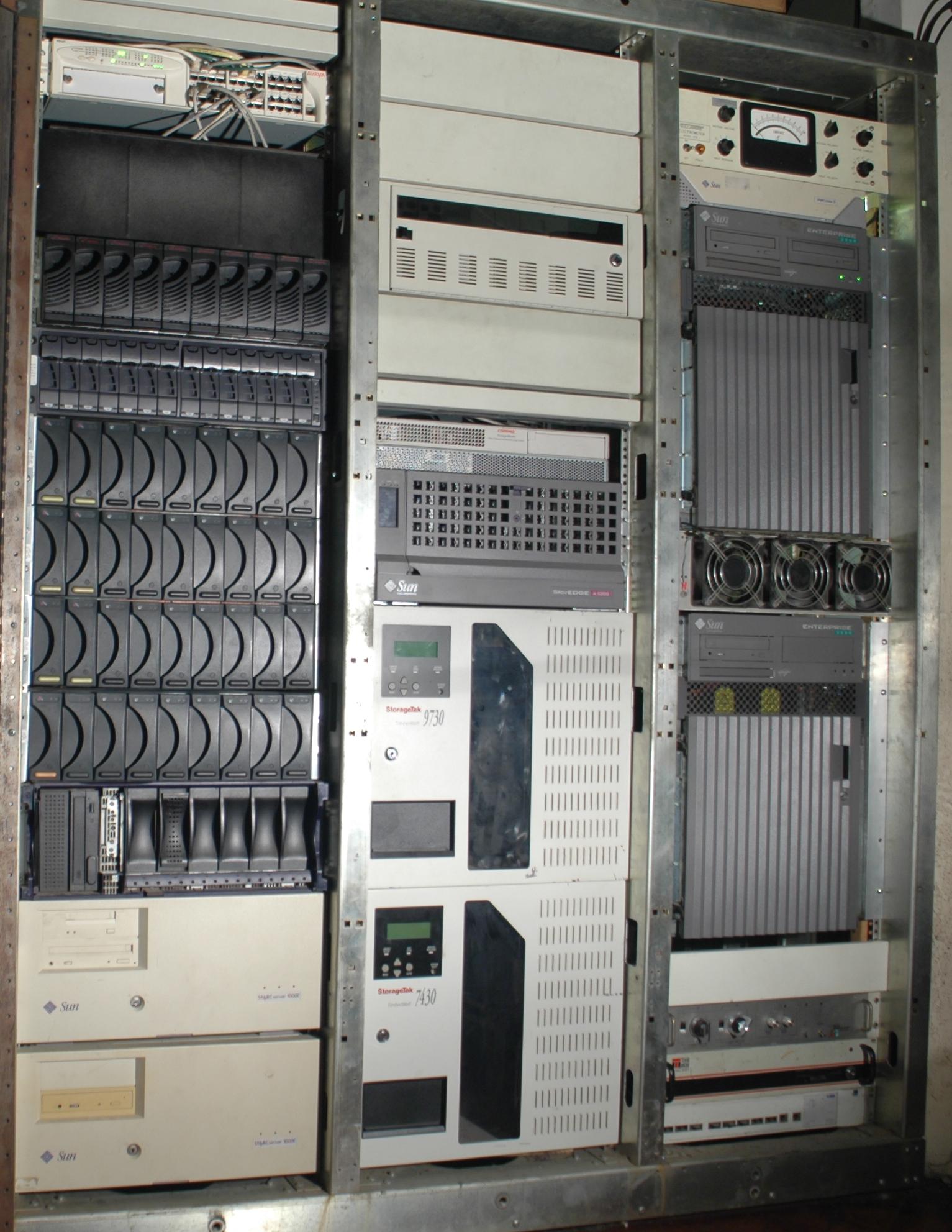
On the right is a set of counters, some spare switches, an SGI Origin200, a dead Clariion box, a few SCSI bays out of an early RS/6000, and some random bits. In the middle are a bunch of tape drives, four storage arrays, and a spare switch. On the left are some meters, the switches I'm actually using, my main Sparcserver-1000, a VME system, and a spare SS1000.
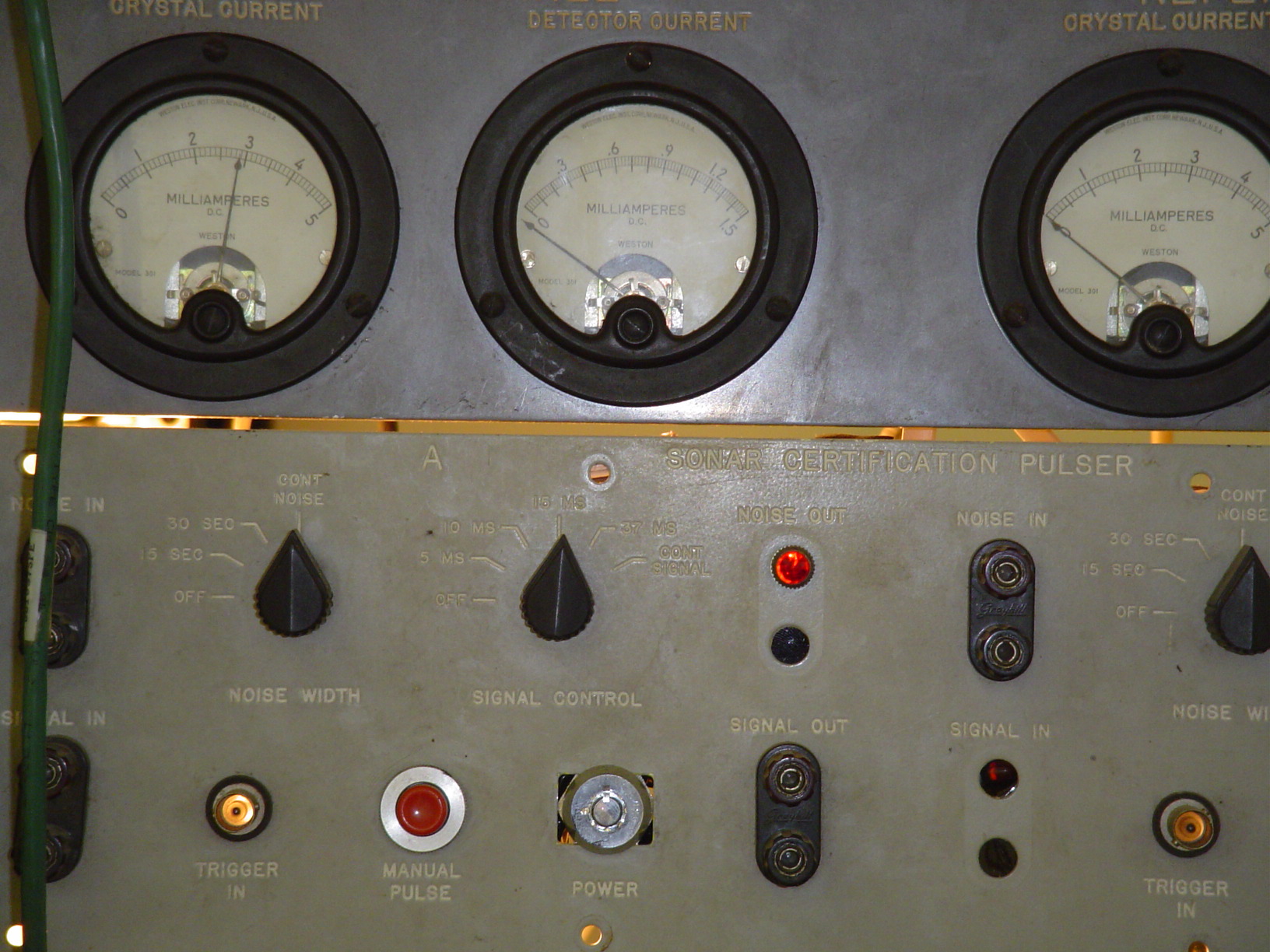
The top left counter keeps track of incoming mail. The others would be functional if I had some more relays to interface my digital out lines. Likewise, the left meter is the only one currently working. (It shows the current terrorist threat level.) A few of the random lights indicate various things.
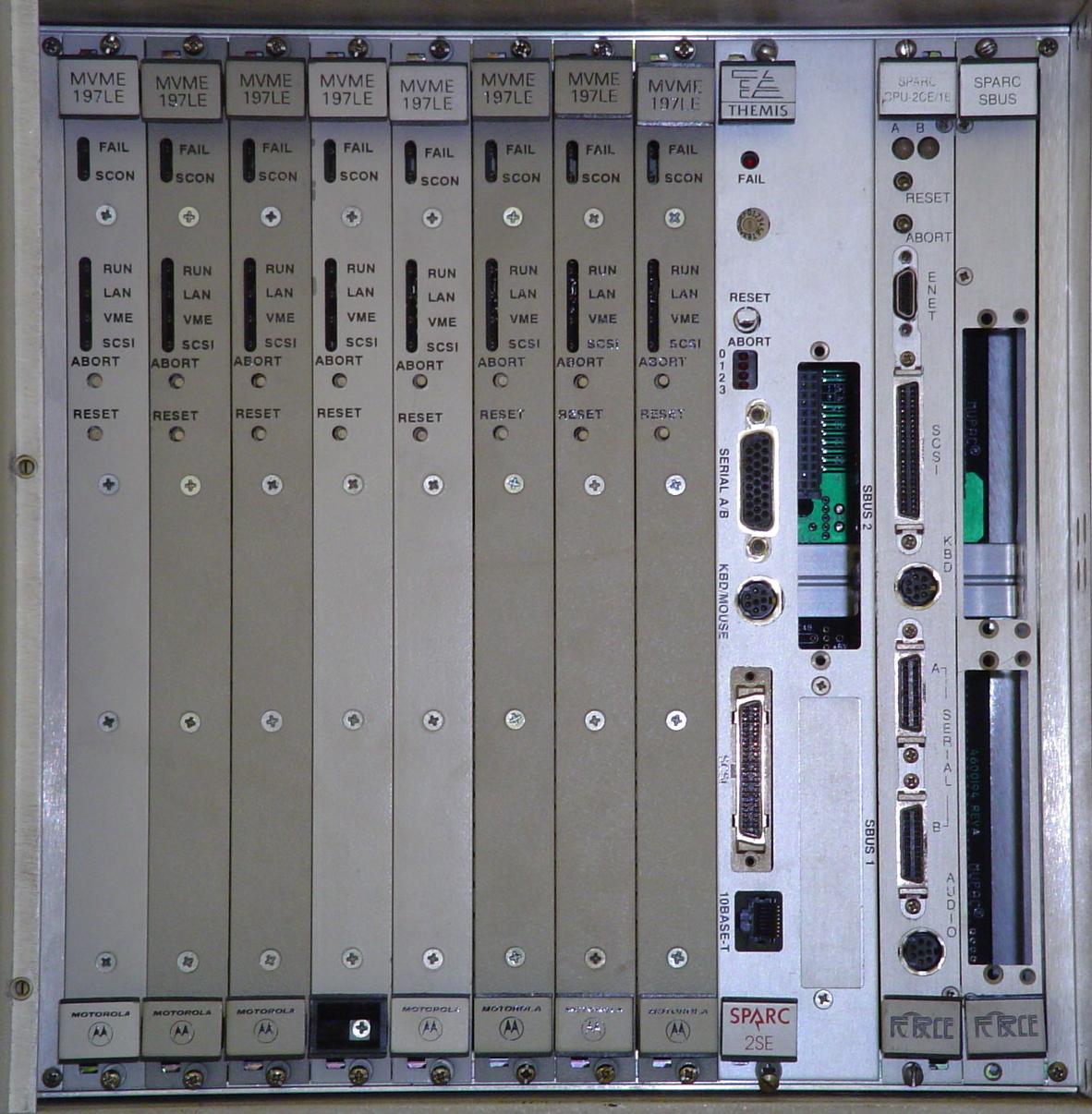
This is an 8-node cluster of Motorola 88K processors (MVME197LEs). Currently it does nothing, as I wait for some version of BSD to support it. Eventually, it will be my postscript supercomputer. (AKA "The Slowest Supercomputer in the World".)
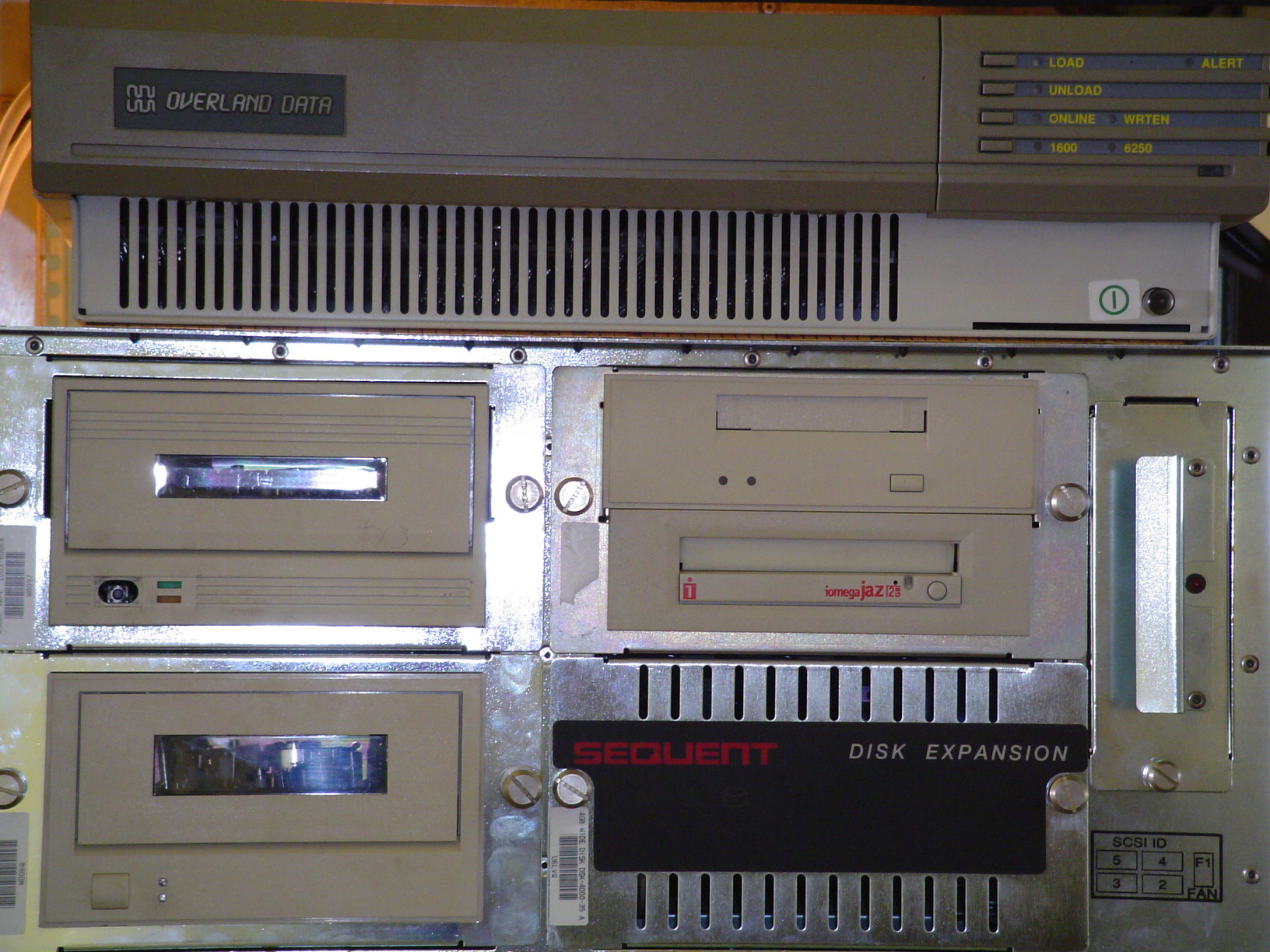
My main computer in all this is a four processor Sparcserver-1000. This one is a little odd - I suspect it's a very early model before the machine was official released, and marketing was still deciding on the name. This is most definately not a Sparccenter-2000. I have two storage arrays currently connected - a Fibre Channel "Sparc Storage Array" (which was the first FC storage array ever sold, if I am not mistaken), and a Ultra SCSI array pulled from a Sequent server. I also have a bay of tape drives in another Sequent array, and a SCSI 9-track drive made by "Overland Data". (The 9-track works, but only in 1600 bpi mode.)
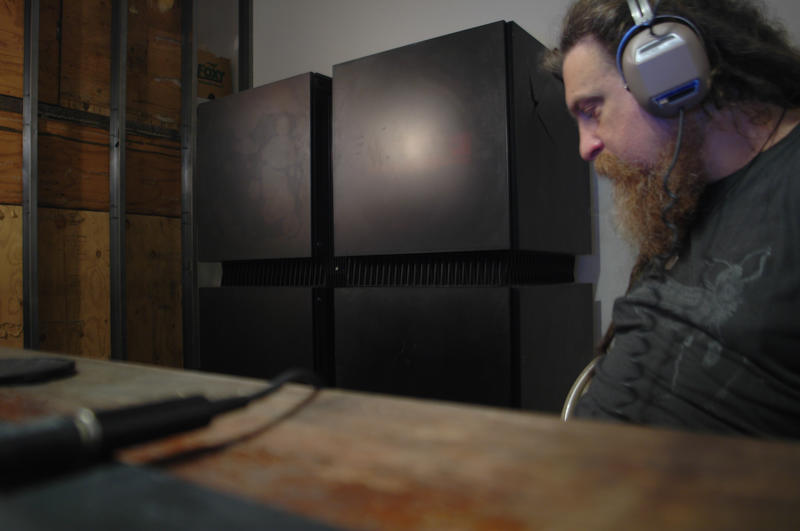
It's all racked up in the chassis from a CM5 supercomputer. (In fact, it's the chassis that was used in the computer room scene in Jurassic Park. Minus the nice black skins & blinkenlights, which wound up on another machine.)
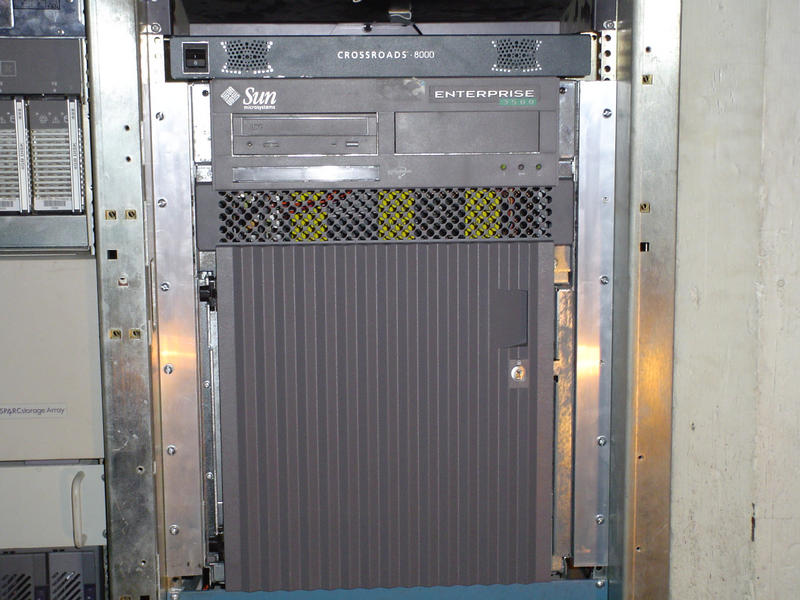
Recently upgraded the ss1000 to an e3500:
It is the perfect home computer.
(And we all know that cats love to warm up in the Sun...)